Bedroom design · Furniture guide
Inside Cisco Home’s Rounded Silhouette: Craft, Materials, and Bedroom Fit
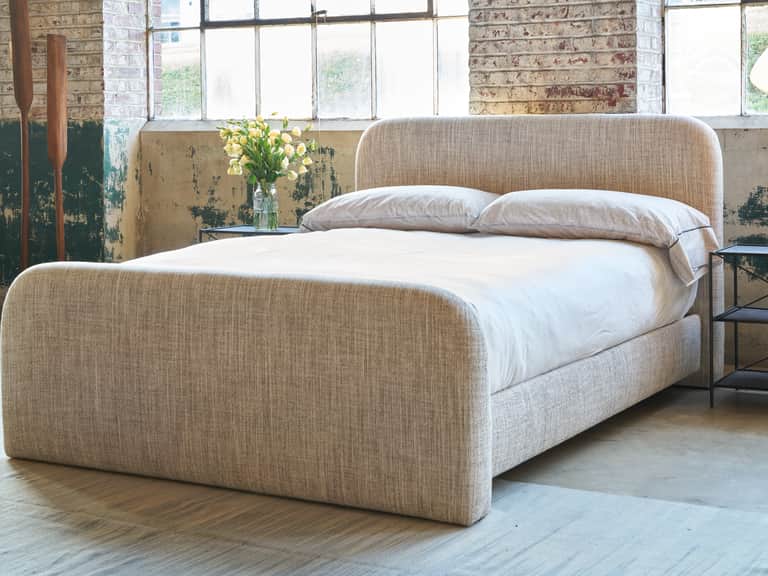
With its softly curved headboard and footboard, the Cisco Home Pebble Bed Frame makes a confident departure from the straight lines that define so many bedrooms. Its look is distinctive, but the details behind the shape matter just as much: FSC-certified wood, a slat-and-platform support system, a low profile, and dimensions that deserve a careful room-by-room check.
A bed is often the largest piece of furniture in a bedroom, which means it rarely gets to be a quiet background choice. It sets the room’s proportions, anchors the color palette, and influences how much open space remains around the other essentials. The Pebble frame leans into that starring role with a rounded silhouette that feels softer than a conventional rectilinear bed without giving up a clear, substantial outline.
The effect is both practical and visual. Curves can take some of the severity out of a room filled with square nightstands, sharp wall corners, and crisp-lined storage. At the same time, a curved headboard and footboard are more than a small decorative flourish: their broad profiles give the frame a strong presence. Understanding the dimensions, construction, mattress fit, and finish can help determine whether that presence feels just right—or simply too much for the available space.
This guide looks closely at the design and specifications of the Cisco Home Pebble Bed Frame, with a focus on what its details may mean in everyday bedroom planning.
A rounded profile with a clear point of view
The defining feature is right there in the name: the Pebble bed’s headboard and footboard have a rounded, softened character. Instead of reading as a series of flat planes and right angles, the bed introduces a more sculptural shape. That quality can make the room feel considered even when the rest of the furnishings are simple.
Curved bedroom furniture can also change the way nearby pieces feel. A boxy dresser or angular bedside table may look more deliberate beside the frame because the forms contrast. Alternatively, a room with other rounded accents—such as a curved chair, a circular mirror, or a gently arched lamp—can use the bed as part of a broader visual theme. There is no need to match every curve. Often, one prominent rounded piece is enough to soften an otherwise linear interior.
The silhouette has a practical planning consequence, too. Rounded ends can project a different visual impression from a plain, straight-edged frame of similar footprint. The furniture may feel more enveloping and substantial, particularly in a smaller room. That is not a reason to rule it out; it is a reason to measure and assess the whole layout rather than relying on a quick glance at a product photo.
Before choosing any bed with a statement profile, consider what you want the room to say. If the aim is calm and minimal, keep nearby furnishings restrained and leave clear space around the bed. If the aim is layered and expressive, bring in contrasting textures or a few complementary curved details. The Pebble frame can support either approach, but it is likely to remain the room’s visual anchor.
FSC-certified wood: a material detail worth understanding
The frame is listed as being constructed with FSC-certified wood. FSC certification refers to a responsible-forestry certification system; it is a sourcing detail, not a guarantee that every part of a product has the same material origin or environmental profile. For buyers who weigh material sourcing as part of a furniture decision, the designation is useful context. It can also prompt sensible questions about what components are covered by a particular claim and what care the finished piece requires.
Material choices influence more than a label. They contribute to how a frame is built, how it feels in a room, and how it may be maintained over time. The available product information identifies FSC-certified wood as the frame material and lists slats and a platform as the support system. It does not specify every construction detail, wood species, or finish treatment, so shoppers should confirm those points with the seller if they are essential to the decision.
That distinction matters because “wood bed” can describe a wide range of furniture, from exposed solid timber to a frame that uses wood in a more complex construction. Likewise, a sustainability credential should be read precisely rather than treated as a blanket claim about every material, process, or component. Looking for specific, current product information helps keep expectations grounded.
For routine upkeep, follow the manufacturer’s care guidance for the actual finish and materials. In the absence of specific instructions, avoid assuming that a strong household cleaner or abrasive pad is appropriate. Dusting with a soft cloth and addressing spills promptly are generally cautious habits, but finish-specific directions should take priority. If the finish, cleaning method, or repair options are important to you, ask before purchase rather than guessing later.
Dimensions that shape the room around it
The standard Pebble frame is listed at 69.5 inches wide, 45.5 inches high, and 92.5 inches deep. A tall-headboard version is listed at 70 inches wide, 57 inches high, and 92.5 inches deep. The taller option adds 11 inches of headboard height, giving the bed a more pronounced vertical presence while keeping the listed depth the same.
Those measurements are useful starting points, not the whole story. A comfortable layout needs clearance for walking, opening drawers, making the bed, and moving around the room. Measure the intended area, then mark out the frame’s footprint on the floor with painter’s tape or another removable guide. This simple test can reveal whether the bed crowds a doorway, overlaps a closet path, or leaves too little room for bedside tables.
Check the route into the room as well. A frame that fits beautifully once assembled may still be challenging to bring through a stairwell, narrow hall, or bedroom doorway. Ask the retailer how the frame is delivered, whether it requires assembly, and whether pieces can be carried and maneuvered through the access route. A tape measure and a few minutes spent checking turns can prevent a stressful delivery-day surprise.
The listed side rails measure 82 inches wide by 9.5 inches high, while the platform is 10 inches high. The footboard is listed at 69.5 inches wide, 26.5 inches high, and 6 inches deep; the tall version’s footboard is listed at 70 inches wide with the same height and depth. These details help clarify the frame’s proportions, but confirm which measurements apply to the exact configuration being ordered.
The frame is listed at 160 pounds. That figure can matter for delivery planning and assembly, especially where stairs or tight turns are involved. It is not a substitute for a stated weight capacity. If you need information about load limits, assembly requirements, or moving the bed, request current specifications from the seller.
Mattress fit and platform support
The Pebble is described as having slat-and-platform support, and the product specifications state that a box spring is not required. That makes the frame a platform-style option: the mattress rests on the bed’s support structure rather than on a separate box spring. For many shoppers, this can simplify the bedroom setup, though mattress compatibility should always be confirmed before ordering.
The listed mattress space is 62 inches wide by 82 inches deep. Because those figures are specific to the product information, compare them with the exact mattress size and dimensions you intend to use. Mattress naming conventions and actual measurements can vary, and the fit should be verified with the retailer—especially if the mattress is unusually thick, has an oversized profile, or is a nonstandard size.
Support is not only about whether a mattress fits inside the frame. Mattress makers often specify the kind of foundation, slat spacing, or platform surface their products require. Ask for the Pebble’s current support details, including any relevant spacing information, and compare them with your mattress warranty and care instructions. A well-matched foundation helps avoid unpleasant surprises after delivery.
Since no box spring is required according to the listing, shoppers may be able to avoid purchasing an additional foundation. Still, do not assume that every mattress works with every platform bed. Confirm the recommended setup for the mattress you own or plan to buy, including whether the mattress needs a particular type of support or ventilation.
The listed platform height is 10 inches, and the legs are listed at 0.25 inches, removable, with metal glides noted. Height affects the everyday feel of the bed: how easy it is to sit on the edge, how much of the mattress is visible, and whether the overall arrangement feels low or elevated. Consider the mattress’s thickness as part of the final sleeping height. A deep mattress can make even a low platform look considerably taller once installed.
Finish, glides, and the small details
The specifications list a polished nickel finish for the glides. Though small, these hardware details can affect the way a bed meets the floor and how it relates to other metal accents in a room. If bedside lamps, drawer pulls, or other furnishings have a particular finish, the glides may be a consideration—but they are unlikely to be the dominant visual feature of the frame.
It is also worth clarifying what is and is not included in the finish description. The listing provides the glide finish, but it does not fully describe a finish for every visible wood surface. If you are choosing bedding, coordinating other furniture, or trying to match a specific palette, ask for details about the available finishes and how they appear in person. Wood tones can look different under varied lighting, and screen images are not always a reliable guide to color.
The product information mentions fabric yardage that may vary, while leather is listed as not applicable. Because that information may relate to configuration or upholstery options, verify what applies to the precise version being purchased. It is best not to infer that every Pebble frame is upholstered—or that a particular fabric is automatically included—without confirming the order details.
How the Pebble frame may fit different bedrooms
In a compact room
A compact bedroom can still accommodate a visually distinctive bed, but the surrounding plan becomes especially important. Start with the footprint and circulation paths. If the frame leaves narrow passages on both sides, a pair of large nightstands may not be the best partners. A single small bedside table, wall-mounted lighting, or a less crowded arrangement can help preserve usable space. The tall headboard may draw the eye upward, while the standard version may feel less imposing in a room with a lower ceiling.
In a larger room
In a spacious bedroom, the rounded outline can help give the sleeping area definition. A bed that is too small for a large room may appear adrift, while the Pebble’s substantial silhouette can offer a stronger focal point. Balance it with appropriately scaled nightstands and enough negative space to let the profile read clearly. A rug beneath or around the bed can help visually connect the frame to the room, provided the rug dimensions and placement work with the layout.
With traditional or contemporary furnishings
The rounded design is modern in character, but it does not demand an all-modern room. A clean, curved outline can sit comfortably alongside traditional wood furniture when finishes and proportions are thoughtfully coordinated. In a more contemporary interior, simple bedding and restrained accents can make the profile stand out without competing with it. Rather than matching every piece, look for a shared element—such as scale, warmth, texture, or a repeated curve—that gives the room cohesion.
A practical checklist before you decide
Good design is only one part of a successful furniture purchase. Use this checklist to connect the visual appeal of the Pebble frame with the realities of your room and routine:
- Measure the room: Check the bed’s width and depth, then account for walking space, doors, drawers, and bedside furniture.
- Choose the headboard height: Compare the standard 45.5-inch height with the 57-inch tall option, including ceiling height and nearby windows or artwork.
- Verify mattress dimensions: Compare your mattress with the listed 62-by-82-inch mattress space and confirm fit with the seller.
- Check support requirements: Confirm the slat-and-platform details and make sure they are compatible with your mattress maker’s guidance.
- Ask about materials and finish: Clarify the wood, visible finish options, glide details, and which specifications apply to your chosen configuration.
- Plan delivery: Measure doorways, stairwells, and tight turns, and ask about shipping, assembly, and the frame’s component dimensions.
- Get care instructions: Request guidance for cleaning and maintaining the finish before using household products on the frame.
These questions are not signs of overthinking. A bed is a long-term, high-use piece of furniture, and a little advance checking can make it easier to enjoy the design once it arrives.
The takeaway: a statement shape with useful specifications
The Cisco Home Pebble Bed Frame brings a soft, rounded silhouette to a category often dominated by straight rails and square corners. Its curved headboard and footboard make the design immediately recognizable, while the listed FSC-certified wood construction, slat-and-platform support, and no-box-spring configuration speak to the frame’s practical side.
Its strongest appeal is the combination of sculptural character and a clear platform-bed setup. Its most important considerations are equally straightforward: the frame’s 92.5-inch depth, its nearly 70-inch width, the choice between standard and tall headboards, and the need to verify mattress and room fit. Finish and configuration details should also be confirmed directly, since the available specifications do not answer every question about materials or options.
For anyone drawn to rounded-frame design, the best next step is to measure the bedroom, check the mattress requirements, and confirm the details of the exact model being considered. With those basics settled, the Pebble’s curves can do what they are meant to do: give the bedroom a distinctive focal point that feels intentional rather than simply oversized.